
Whoa! Crypto storage used to mean scribbling seed phrases on paper and locking them in a safe. Simple. Risky. Really?
Okay, so check this out—smart-card hardware wallets have quietly matured into something that feels both modern and stubbornly old-school at the same time. They’re tiny. They sit in your wallet. And they use secure elements, the same kind of hardened chips that banks and passports rely on. My instinct said this was just hype at first. But then I dug into specs, vendor docs, and user reports and started seeing a pattern: for people who want multi-currency support, contactless convenience, and true cold storage isolation, smart cards hit a unique balance.
Short version: this isn’t perfect. But it’s an elegant compromise.
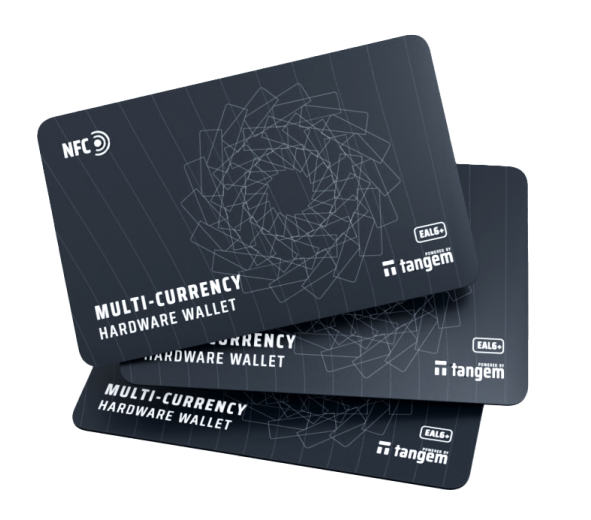
The promise: multi-currency support without the clutter
Multi-currency is where a lot of wallets stumble. Wallet A supports Bitcoin well. Wallet B is decent for ERC-20 tokens. Wallet C tries to be everything and ends up being confusing. On one hand you want a single device that handles many chains. On the other hand you want the security guarantees that usually come from specialized implementations.
Smart cards solve that by isolating the private key operation in a hardware-secure element and exposing a signing API that can be used by mobile apps. That architecture lets software layers add new token support without touching the secure key store. So when a new token standard gains traction, often the mobile wallet or backend can be updated to recognize and assemble transactions, while the card simply signs what’s presented. Neat, right?
But here’s what bugs me:
Token standards and wallets vary widely. Some tokens require complex contract interactions. Some require mixing multiple scripts. Smart cards are powerful, but they aren’t magical. If the host app constructs a malformed transaction, the chip will dutifully sign it, and you’ll be in trouble. So you still need trusted software and careful UX—very very important.
That said, a good smart-card implementation reduces attack surface. You don’t expose mnemonic seeds to phones. You don’t carry an executable seed phrase around. The key’s edge cases are different, though, and you should understand them.
Contactless payments: the UX leap
Contactless feels like the future because it’s fast. Tap your card, confirm a payment on your phone, done. For crypto that opens up new possibilities: pay at a café with an on-the-spot swap, sign a Lightning invoice, or push a token transfer to a PoS terminal. Hmm… exciting, right?
There are two dimensions to think about: merchant acceptance and settlement. Merchant terminals want fiat or fast conversions. Crypto wallets and payment rails either handle that on-device or route to a gateway. So, in practice, contactless crypto payments often rely on an off-device service that does the heavy lifting. The smart card’s role is to keep the signing keys secure while letting the smartphone be the UI and the network bridge.
Initially I thought contactless would instantly replace cards and apps. Actually, wait—let me rephrase that. It won’t replace anything wholesale. It will carve out niches: travelers who want quick payments, privacy-conscious folks who hate giving data to intermediaries, and developers who want a physical second factor for mobile payments.
Cold storage—reimagined
Cold storage traditionally meant “no network, paper seeds, hardware devices that stay offline.” Smart cards add a twist: they can be true cold storage if you never expose the private key. The chip signs only after you present a challenge via NFC, and the card doesn’t output the private key or a seed. That makes it air-gapped in effect—even when used via a phone.
On the flip side, recovery becomes philosophically different. There’s no mnemonic to read back. That can be scary for users who equate control with a seed phrase they can scribble. Some vendors address this by letting you create multiple cards as backups, or by offering custodial recovery options. I’m not 100% sure every option is perfect.
Here’s the nuance: if you carry a single card and lose it, your recovery path depends on what ecosystem controls. If you made a backup card and stored it separately—good. If your wallet provider offers a recovery service—fine, but that reintroduces a trust assumption. On one hand it’s elegant and compact; on the other hand it can be a single point of failure.
Security trade-offs you should actually care about
Secure element certification matters. Not all chips are equal. Common criteria and EMV-level validations provide real assurance. But certs expire, firmware has bugs, and supply chains are human. So yes—watch the details.
Also, NFC adds attack vectors. Relay attacks exist in theory. In practice, the most realistic threats are phishing apps and compromised host devices. The card can’t prevent a malicious app from asking you to sign garbage. So stick to vetted wallets and keep your phone OS patched. Somethin’ as small as an app overlay can wreck your day.
Here’s a simple hygiene checklist I give folks who ask me: use a dedicated wallet app from a reputable team, enable vendor-recommended protections, make at least one offline backup (if supported), and keep one card physically separated from your everyday wallet. Do that and you’ll reduce the common failure modes—though nothing is bulletproof.
Why Tangem-style smart cards matter (and where to learn more)
Companies like Tangem have pushed the form factor forward, packaging secure elements into slim contactless cards that feel familiar in your wallet. They emphasize no-seed setups and a straightforward UX, which appeals to mainstream users and businesses exploring crypto payments. If you want to check a specific implementation and spec details, see this resource: https://sites.google.com/cryptowalletuk.com/tangem-hardware-wallet/
Seriously, that link is a good jumping-off point if you’re sizing up smart-card options. Compare the claimed features to independent reviews and community audits. Ask the vendor about firmware update models and how they handle lost-card scenarios. Ask the hard questions.
Real-world use cases and who should care
Small businesses can use smart cards to secure treasury keys without full HSM complexity. Travelers can keep a contactless card in a front pocket for quick swaps and payments without exposing a seed. Developers can create payment flows that require physical confirmation, which reduces automated fraud risk. On the other side, long-term hodlers who like a printed seed and a safety deposit box might not switch—because their workflow is different.
I’m biased, but the middle user—someone who wants security without being a sysadmin—gets the most benefit. The card hides complexity. The phone provides UX. Together they cover a lot of practical ground.
FAQ
Can one smart card really hold keys for many blockchains?
Yes, typically the card stores private keys and the wallet app handles chain-specific transaction construction. The card signs the transaction payloads. That arrangement allows support for multiple chains, but compatibility depends on the app and the card’s signing interface.
Is NFC safe for signing crypto transactions?
NFC itself is a transport. The security is in the secure element and the protocols. While theoretically relay attacks exist, practical risk is mitigated by user interaction requirements and proximity limits. The bigger risks come from malicious host apps and social engineering.
What happens if I lose the card?
It depends on your backup strategy. Some users mint duplicate cards. Others rely on vendor recovery. Each approach trades independence for convenience. Plan before you act.
Alright—final thought and then I’ll stop. There’s no single right way to hold crypto. Smart cards are not a panacea, but they are a pragmatic step toward making cold storage less scary for normal people. If you value minimal fuss and strong on-device protections, look at the specs, ask about audits, and consider a backup plan that you can actually follow when you’re tired or traveling. You’ll thank yourself later—trust me, you’ll thank yourself.
Leave A Comment